

Real-time hydraulic model simulation
Application Field
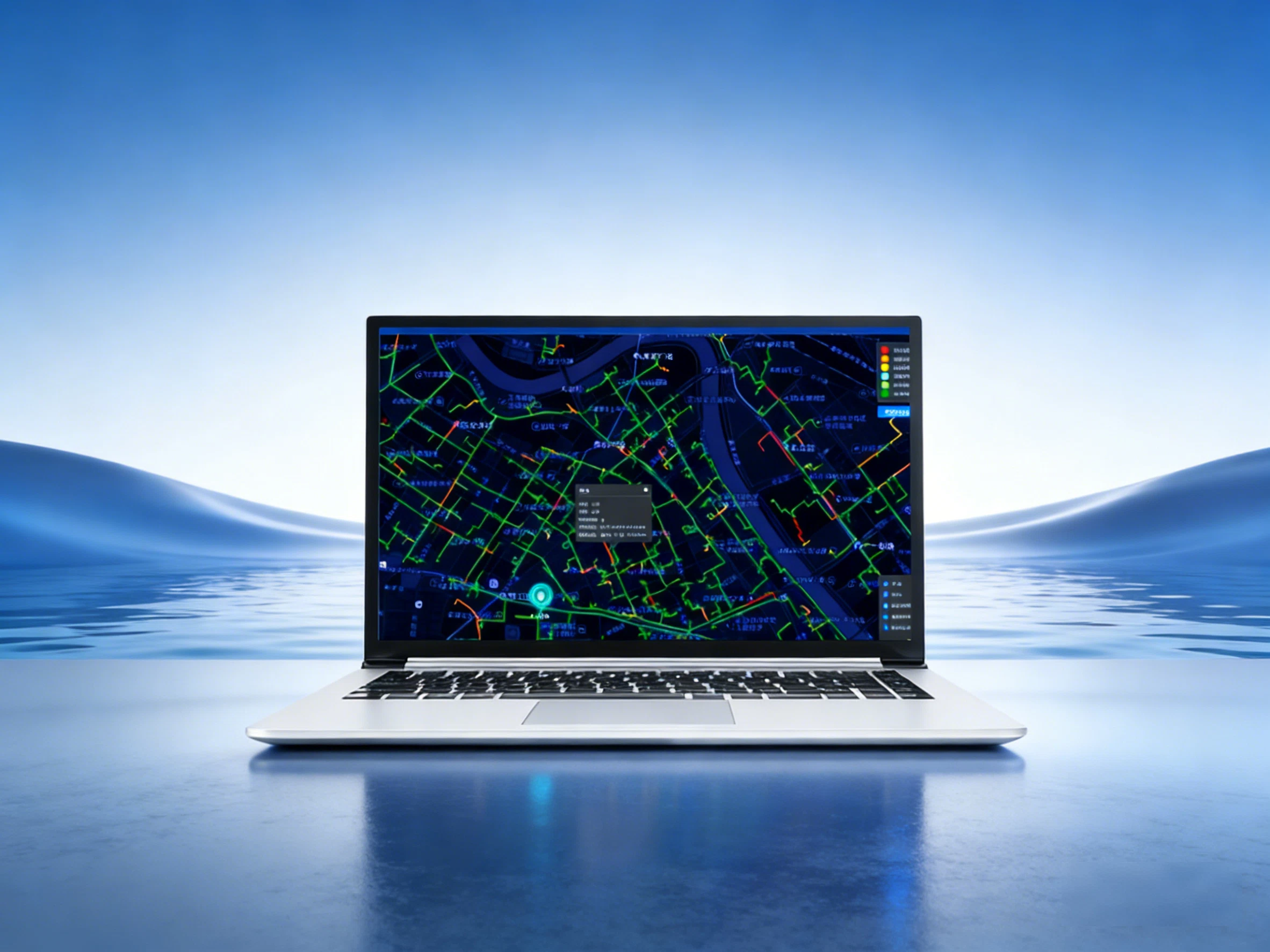
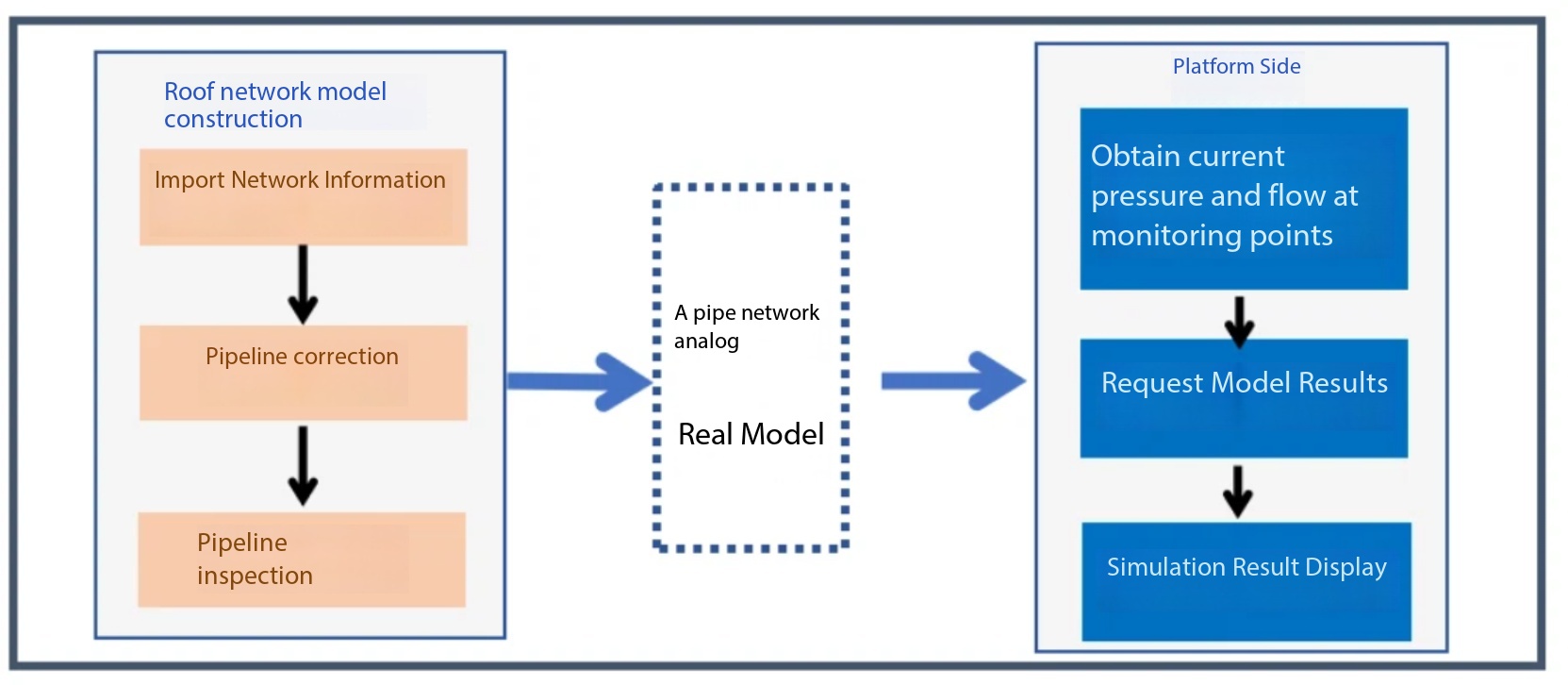
Through the hydraulic model method, based on the measured values of a small number of monitoring points, the pressure and flow values across the entire network are simulated in real time, and the actual measured values and simulated values are compared to assist in the determination of pipe network abnormalities.
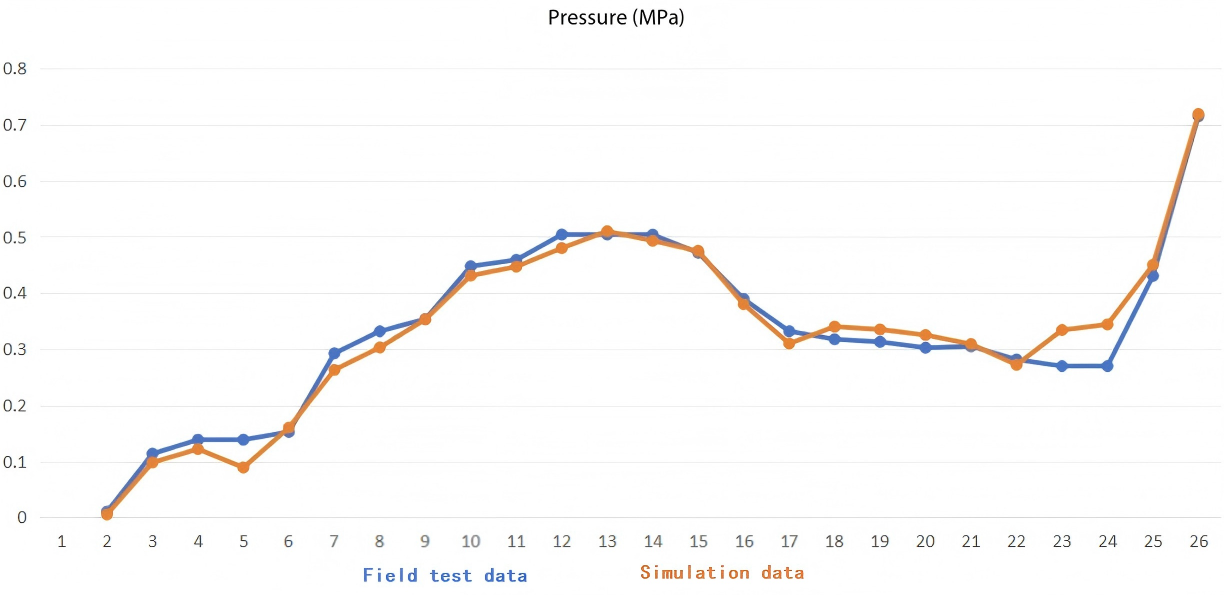
The picture above shows the comparison between the measured data and the simulated data at the intermediate station during the project's pressure regulation process. The model is a pipeline model, and the input values are the real-time flow rates at the upstream outbound and downstream inbound stations. The simulation output at this point is pressure data, and its Nash coefficient reaches 0.9948, indicating a good model match.
1、Refined simulation technology of "water hammer" in pressurized long-distance pipelines
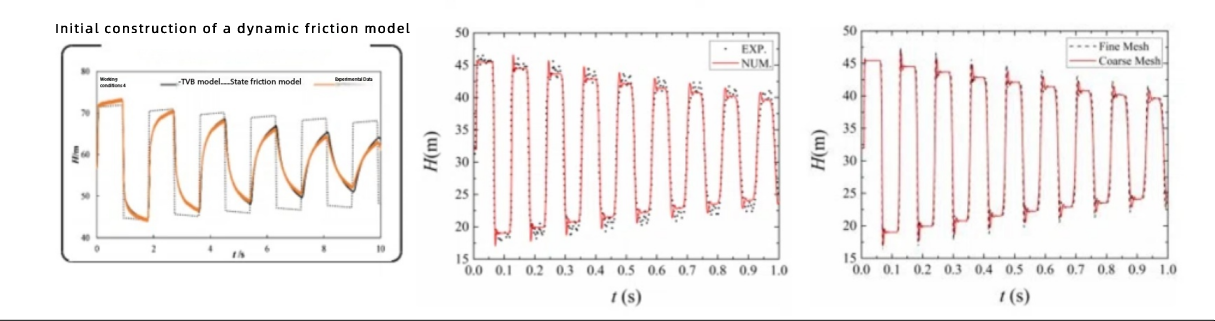
An accurate numerical model of all hydraulic factors and Godunov solution format for multiple types of water hammer problems are proposed, breaking through the shortcomings of the traditional water hammer characteristic line method. Overcome the problem of low simulation accuracy of pressure distortion and peak attenuation in complex pipelines.
Research content: Construct a water hammer model of dynamic friction and viscoelasticity, introduce the second-order finite volume method GODUNOV and MUSCL solution formats, and compare it with the measured results to achieve accurate, stable and efficient simulation of water hammer.
Technological innovation: Propose accurate numerical models and Godunov solution formats for all types of actual "water hammer" problems, breaking through the shortcomings of traditional water hammer model simplification and characteristic line methods.
Technical advantages: Overcome the problem of low simulation accuracy of pressure distortion and peak attenuation in complex pipelines, laying the foundation for accurate monitoring.
2、Simulation and control technology for gas stagnation transient characteristics of pressurized long-distance pipelines
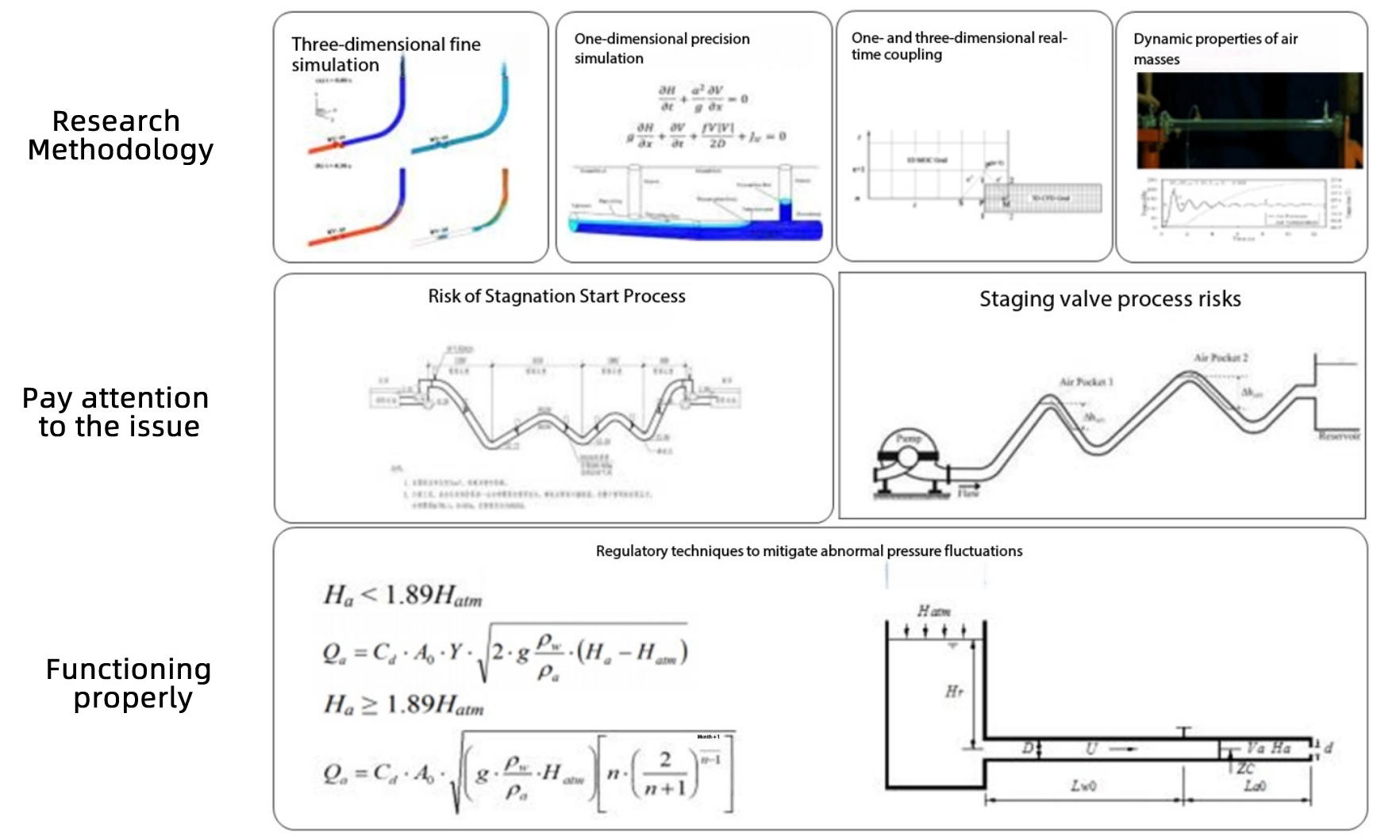
The water-gas coupling mechanism characteristics, simulation methods, pipe burst risks and control technologies are proposed. Accurately simulate abnormal pressure fluctuations caused by water-gas coupling and quantify the risk of pipe bursting.
Research content: Based on one-dimensional and one-three-dimensional real-time coupling methods, analyze the dynamic characteristics, action mechanism and risk factors of transient flow containing trapped air masses during the startup process and valve closing process of the water delivery system to achieve safe and efficient control of air-containing water hammer.
Technological innovation: Propose water-gas coupling mechanism characteristics, simulation methods, pipe burst risks and control technologies in water diversion projects.
Technical advantages: It can accurately simulate abnormal pressure fluctuations caused by water-gas coupling and quantify the risk of pipe bursting.
3、Pipe network water quality model analysis
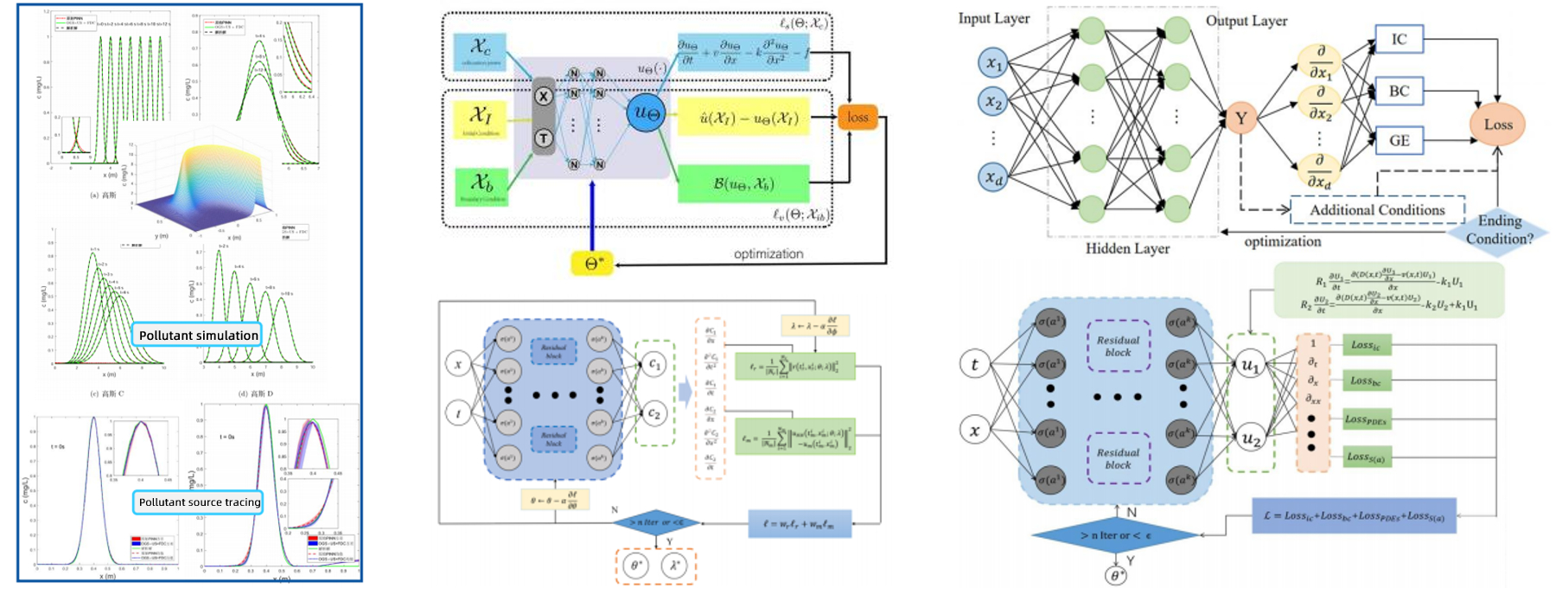
We constructed the simulation of forward and reverse problems of pollutant transport based on physical neural network (PINN), the analysis of forward and reverse problems of multi-reactants, and the identification of multi-reactant parameters with variable coefficients in space and time.
Research Topic: Simulation of pollutant transport problems with PINN, learning of multi-reacting problems with PINN, and identification of multi-reacting parameters with spatio-temporal variable coefficients.
Technological Innovation: Proposing the coupling mechanism and characteristics of water and gas in water diversion and transfer projects, simulation methods, pipeline rupture risks, and control technologies.
Technical advantage: Ability to accurately simulate abnormal pressure fluctuations in water-gas coupling, thus quantifying the risk of pipe rupture.